
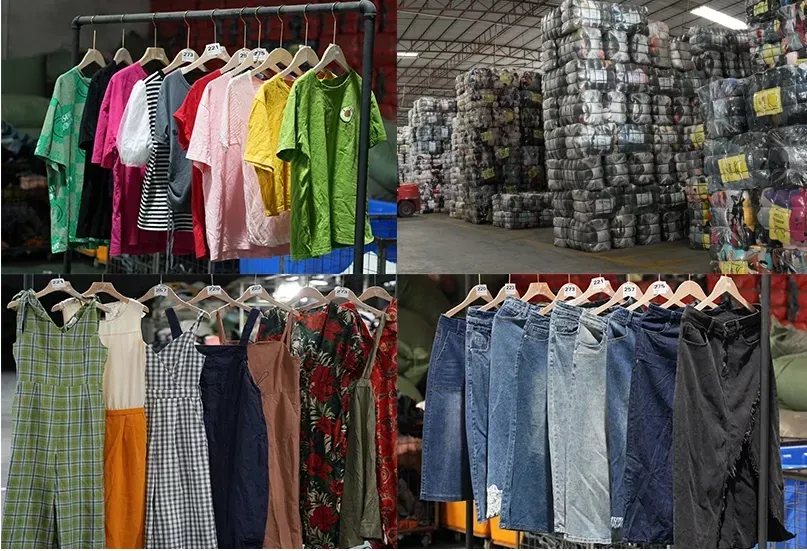
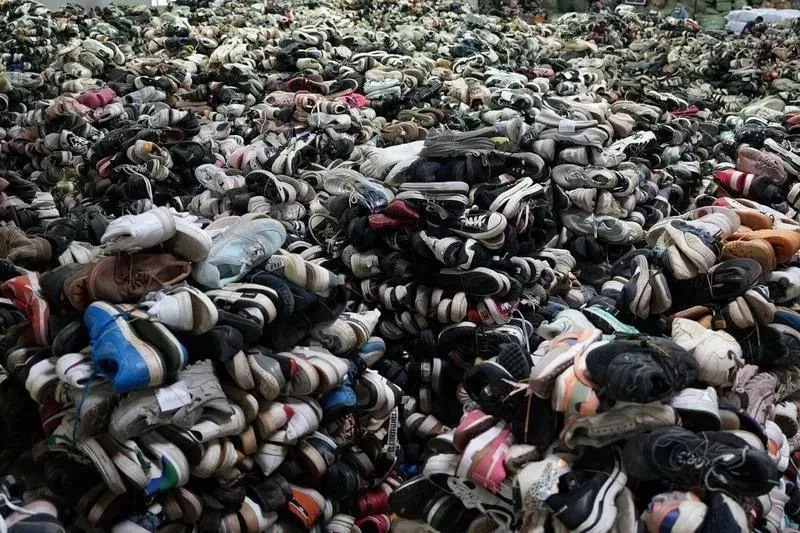
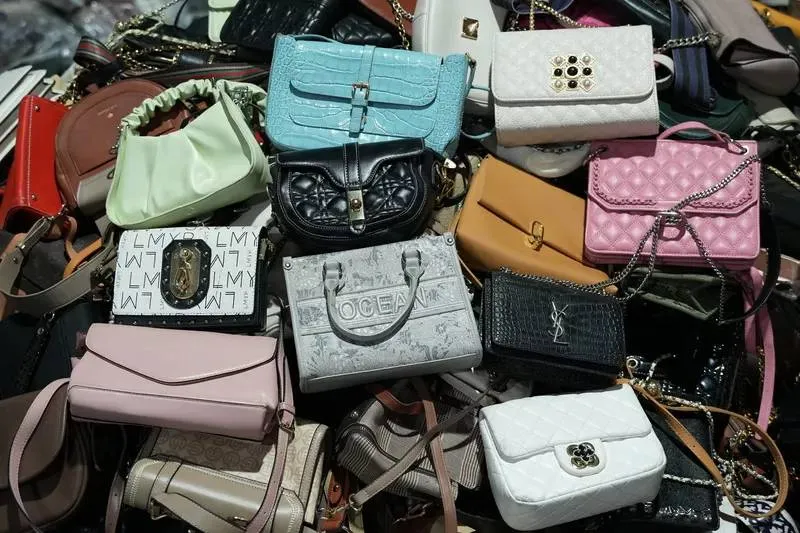
Home / Quality Grade

Used Clothing Quality Grades for Wholesale Orders

Understand what Grade A and Grade B mean for used clothes, shoes and bags — how grade is determined per product, and what grade does not guarantee.

⭐ Grade A / Grade B System 👕 👟 👜 Product-Specific Criteria 🌍 Not a Country-Fixed Rule
Why Grade Matters

Grade drives four commercial decisions

Grade is not just a quality label — it affects price, resale positioning, target customer and your purchase expectation.

💰

Pricing

Higher grade typically means higher unit cost and higher potential resale price.

🎯

Market Positioning

Grade determines which resale segment the goods fit — budget, value or premium.

🧍

Target Customer

Different customers buy different grades. Grade should match your buyer profile.

📊

Purchase Expectation

Clear grade definition prevents expectation mismatch between what you order and what you receive.

Grade Definitions

Our commercial grading system

Ross operates a commercial Grade A / Grade B system. The exact criteria are product-specific — not one universal table for all used goods.

Higher Grade

Grade A

Grade A represents the higher commercial tier in our system — goods with fewer visible defects and better resale appearance.

Typical Characteristics

  • Better overall condition within the product category
  • Fewer visible defects than Grade B
  • Suitable for value-focused or curated resale segments
  • Higher unit cost, targeting higher resale price
Exact Grade A criteria are confirmed per product line — clothes, shoes and bags each have their own criteria.
Standard Grade

Grade B

Grade B represents the standard commercial tier — goods with more visible wear, suitable for budget and volume resale channels.

Typical Characteristics

  • Standard condition within the product category
  • More visible signs of use than Grade A
  • Suitable for volume, price-driven resale channels
  • Lower unit cost, targeting broader resale reach
Exact Grade B criteria are confirmed per product line — clothes, shoes and bags each have their own criteria.
Expectation Management

What grade does not guarantee

Used goods are naturally variable. Grade describes a commercial tier — it does not mean identical pieces or zero signs of use.

⚠ Grade does not mean

These are common buyer assumptions that do not match how commercial grading works for used goods. Understanding this prevents expectation mismatch.

Identical style, size or color — pieces within a grade vary naturally.
Specific brand guarantee — brand presence is stock-sensitive, not grade-driven.
Zero signs of use — even Grade A used goods show some signs of prior use.
Like-new condition — used goods are not new goods, at any grade.
90% / 95% new — percentage-based condition claims are not part of our grading.
No defects at all — grade manages defect level, not defect absence.
Fixed by destination country — grade is a commercial choice, not a country rule.
Uniform across categories — clothes, shoes and bags are graded differently.
Criteria by Product

Each product category is graded differently

There is no universal grade table for used goods. Clothes, shoes and bags are assessed on different condition dimensions.

👕

Clothes Criteria

Clothing grade is assessed on fabric integrity, visible wear and completeness.

  • Stains, holes and fabric damage
  • Seams, zippers and button integrity
  • Pilling, fading and shrinkage
  • Category consistency (type, season)
  • Completeness where relevant
Grade A clothing shows fewer of these issues than Grade B.
👟

Shoes Criteria

Shoe grade is assessed on sole wear, upper integrity and pair matching.

  • Sole wear, separation and cracking
  • Upper surface and material integrity
  • Left/right pair matching
  • Size consistency within pairs
  • Odor, deformation and overall wear
Grade A shoes show less sole and upper wear than Grade B.
👜

Bags Criteria

Bag grade is assessed on hardware, structure and surface integrity.

  • Zipper function and closure
  • Handle and strap stitching
  • Hardware — buckles, rings, feet
  • Surface peeling, cracking and stains
  • Shape retention and structure
Grade A bags show fewer hardware or surface issues than Grade B.
Grade Comparison

How the two grades typically differ

This comparison describes general differences between grades — not a fixed universal standard. Exact criteria are confirmed per product line.

Dimension Grade A Grade B
Visible condition Fewer visible defects within the category More visible signs of use
Resale positioning Value-focused or curated resale Budget or volume resale
Typical unit cost Higher per unit Lower per unit
Target customer Buyers seeking better condition Buyers seeking volume and price
Variation within grade Still varies — grade is a tier, not uniformity Still varies — grade is a tier, not uniformity
Note: This comparison is descriptive, not prescriptive. It does not define a universal industry standard. Actual Grade A and Grade B criteria are confirmed per product line, and both grades still contain natural variation in style, color, size and brand.
What May Vary

What varies at every grade

These are the natural variations that grade does not control. They apply to both Grade A and Grade B, and are stated up front.

🎨

Style & Design

Pieces within a grade vary in style, design and fashion category.

🎨

Color

Color distribution within a grade is not fixed or selectable per piece.

📏

Size

Size ratios vary naturally within a mixed lot at any grade.

🏷️

Brand

Brand presence is stock-sensitive and not guaranteed as permanent or uniform.

🧵

Material

Material composition varies within a lot, especially in mixed categories.

🔍

Wear Level

Wear varies within a grade — grade manages the range, not individual pieces.

How to Choose

How to choose the right grade for your market

Grade is a commercial decision

The right grade depends on your resale strategy, target customer and price point — not on a fixed rule for your country.

  • Start with your resale segment Are you selling to budget, value or premium customers? Grade should match that segment.
  • Consider your price point Higher grade supports higher resale price but reduces volume per unit cost.
  • Think about your customer expectation Buyers who expect near-new appearance need Grade A; buyers focused on volume fit Grade B.
  • Test before committing A trial order lets you verify whether the grade fits your market before scaling.
  • Mix grades where supported Some orders can combine grades within one shipment if the configuration supports it.
Note: We do not apply a fixed grade per country. Destination does not automatically determine grade — your resale positioning does. If you are unsure, we can recommend a grade direction based on your market.
How Grade Is Controlled

Grade is applied through the QC process

Grade is not just a label — it is applied through sorting, inspection and classification. The full process is documented on the Production & Quality page.

From inspection to grade classification

Goods are inspected against product-specific criteria during sorting. Items are then classified into grades, with items below grade either reclassified or removed.
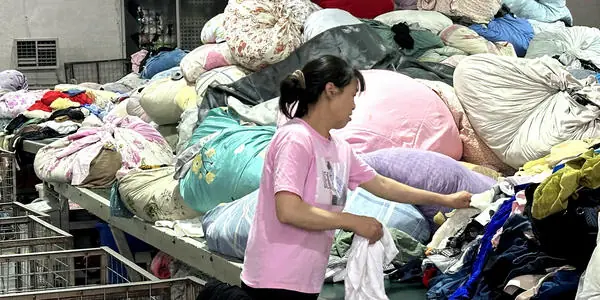
  • Inspection against product-specific criteria
  • Classification into Grade A or Grade B
  • Items below grade reclassified or removed
  • Grade composition recorded per lot
  • Grade checked again during pre-loading verification
Workers grading and quality-checking used clothing on sorting tables
Grade FAQ

Questions about used clothing grades

What is the difference between Grade A and Grade B?
Grade A is the higher commercial tier — goods with fewer visible defects within the product category. Grade B is the standard tier — goods with more visible signs of use, suitable for budget or volume resale. The exact criteria are product-specific: a Grade A shirt is assessed differently from a Grade A shoe or bag. Both grades still contain natural variation in style, color, size and brand.
Does Grade A mean "like new" or "no defects"?
No. Grade A used goods still show some signs of prior use. Grade describes a commercial tier, not a like-new condition. We do not use percentage-based claims such as "90% new" or "95% new" because these do not reflect how commercial grading works for used goods. What varies at every grade is stated up front.
Is grade fixed by destination country?
No. We do not apply a fixed grade per country. Grade is a commercial choice based on your resale positioning, target customer and price point — not on your destination. Two buyers ordering for the same country can choose different grades based on their own resale strategy.
Are clothes, shoes and bags graded the same way?
No. Each product category has its own grade criteria. Clothes are assessed on fabric and seams; shoes on sole and upper; bags on hardware and structure. We do not apply a universal grade table across all used goods. This is why grade is confirmed per product line, not per order.
What does "Cream" mean in your product listing?
"Cream" is a commercial product name used in some bag listings. We do not currently define it as A+, Premium or Like New — that terminology is on hold pending internal confirmation. If you see "Cream" in a product description, ask us for the current condition and packing details for that specific product.
Can I mix Grade A and Grade B in one order?
In some cases, yes — a mixed-grade order can be configured if the product and packing support it. The grade composition is confirmed on the order specification. Tell us your target grade mix and we will confirm what is feasible for your order.
How do I know which grade fits my market?
Grade should match your resale segment, price point and customer expectation. If you are unsure, we can recommend a grade direction based on your destination, product interest and resale positioning. A trial order lets you verify grade fit before scaling.
Ask about grades

Tell us your market — we confirm the right grade direction

If you are unsure which grade fits your resale segment, send us your destination, product interest and target customer. We confirm a grade direction with you.

Grade confirmed per product line, not per country
Product-specific criteria for clothes, shoes and bags
Grade checked through the QC process before loading

Talk directly on WhatsApp: +86 197 0015 6758

Ask About Grade Options

Fields marked * are required.

Contact Form - 202609

For existing orders, use our after-sales support instead.

Request a Wholesale Quote

Contact Form - 202609

For existing orders, use our after-sales support instead.