

Home / Profit Model

Wholesale Used Clothing Profit & Cost Planning

Understand the variables that affect purchase economics — product cost, grade,
packing, freight, landed cost and local market factors. A planning framework,
not a profit guarantee.

📊 Cost & Margin Variables
🚢 Freight & Landed Cost
⚠️ No Profit Guarantee
Direct Answer

What this page is — and is not

This page explains how purchase economics work for wholesale used clothing. It shows which costs and variables affect your landed cost and potential resale margin.

It does not promise a profit, a fixed margin, or a guaranteed sell-through rate. Actual outcomes depend on your own market, pricing, channel and customer base.

Use it as a planning framework — not a return-on-investment projection.

Cost Structure

Your landed cost is built from five components

Landed cost is more than the product price. These five components together define what the goods actually cost you at your warehouse.

Product Cost
+
Logistics
+
Import / Clearance
+
Local Delivery
+
Other Buyer Costs
1

Product Cost

Unit or bale price based on product, grade, packing and order volume.

2

Logistics

Freight, container cost and inland transport to your destination port.

3

Import / Clearance

Applicable duties, taxes and customs clearance costs at your destination.

4

Local Delivery

Transport from port to your warehouse and any local handling fees.

5

Other Buyer Costs

Warehousing, sorting at destination, financing or other local costs.

Note: Some of these costs are controlled by Ross (product cost), while others depend on your destination, freight market, local duties and your own operations. Landed cost is a buyer-side calculation, not a fixed figure we can publish.
Product Mix Economics

How product mix affects your economics

Different product categories have different cost structures, turnover rates and resale dynamics. Mix is an economic decision, not just a product decision.

👕

Used Clothes

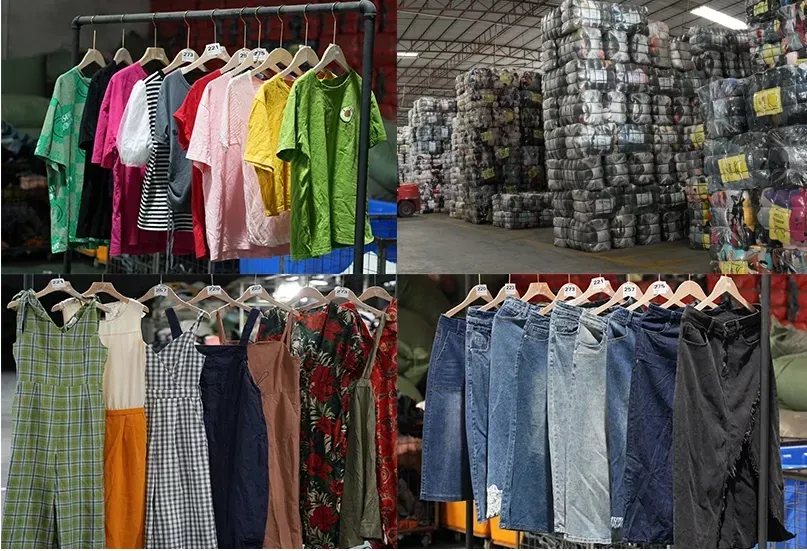
Clothing typically offers high volume and broad resale reach, but lower per-unit margin than premium categories.

  • High unit volume per order
  • Broad resale channel fit
  • Grade choice affects both cost and sell-through
  • Seasonal weighting matters in some markets
👟

Used Shoes

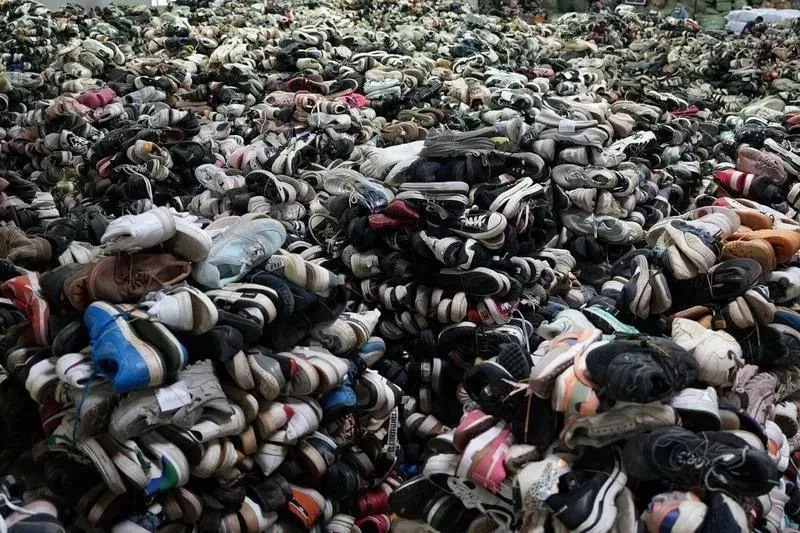
Footwear often supports higher per-unit resale, with demand strongly tied to grade and brand mix.

  • Higher per-unit resale potential
  • Pair integrity matters for value
  • Brand presence affects resale speed
  • Packing format impacts freight cost
👜

Used Bags

Bags can support higher-value resale but demand material-specific sorting and condition awareness.

  • Material (PU, leather, fabric) affects value
  • Hardware condition drives resale price
  • Niche resale channels may apply
  • Packing by piece changes cost structure
Order Size Economics

How order size affects your cost per unit

Order size changes freight efficiency, packing cost and per-unit landed cost. It also changes your working capital and inventory risk.

Trial

Lower capital commitment and lower inventory risk, but higher per-unit freight cost.

  • Lowest upfront capital
  • Highest per-unit freight share
  • Best for verification before scaling
  • Not optimized for per-unit cost

Bulk

Balanced per-unit cost and inventory risk — suitable for consistent repeat supply.

  • Moderate capital commitment
  • Better per-unit freight efficiency
  • Suits repeat supply channels
  • Inventory risk scales with volume

Container

Best per-unit freight efficiency, but highest capital commitment and inventory risk.

  • Highest upfront capital
  • Best per-unit freight cost
  • Requires logistics readiness
  • Resale channel must absorb volume
Freight & Landed Cost

Shipping cost and landed cost are different things

Shipping cost is one line item. Landed cost is the total you pay to get goods to your warehouse — and it is what matters for margin planning.

🚢

Shipping Cost

The cost of moving goods from origin to destination port.

  • Freight rate depends on route, carrier and season
  • Container type affects total but not always per-unit cost
  • Packing efficiency affects how much fits per container
  • Packing comes before loading quantity is planned
📦

Landed Cost

The total cost of goods once they arrive at your warehouse.

  • Product cost + freight + import duties + local delivery
  • Duties and taxes vary by country and product category
  • Local handling and warehousing add to landed cost
  • Landed cost is the base for margin calculation
Margin vs Markup

Two terms that are often confused

Margin and markup describe different things. Using the wrong one distorts your economic planning.

Understanding the difference

Margin is calculated on the selling price. Markup is calculated on the cost. A 50% markup is not the same as a 50% margin.

Margin

Percentage of the selling price that is profit.

Margin = (Price − Cost) ÷ Price

Markup

Percentage added to the cost to reach the selling price.

Markup = (Price − Cost) ÷ Cost
Example: If landed cost is $1.00 and you sell at $1.50, your markup is 50% but your margin is only 33%. Always clarify which metric you are using when planning.
Margin Variables

What actually moves your margin

These are the variables that most affect margin in wholesale used goods. Some are controlled by Ross, some by you, some by external factors.

💰

Purchase Price

Determined by product, grade, packing and volume — confirmed per order.

Grade Choice

Higher grade raises cost but may support higher resale price.

📦

Packing Efficiency

Better packing lowers freight per unit — product-specific, not universal.

🚢

Freight Rate

Route, carrier and season affect shipping cost — outside our control.

📄

Duties & Taxes

Destination country import costs vary and are the buyer’s responsibility.

🎯

Resale Price

Your local market positioning and channel determine what you can charge.

⏱️

Sell-through Speed

How fast goods sell affects working capital and inventory carrying cost.

🔄

Sellable Rate

Not all goods may sell at your target price — this affects effective margin.

📊

Local Operating Cost

Warehousing, sorting, labor and distribution at your destination.

Data Layers

Where the numbers actually come from

Not all numbers carry the same weight. We distinguish four data layers so you know what is confirmed, what is yours, what is dynamic, and what is only an illustrative assumption.

Four data layers in profit planning

Any profit model combines these four layers. Confusing them leads to unrealistic expectations.

Layer 1

Ross Data

Product cost, packing specification and confirmed order terms. Provided by Ross per order.

Layer 2

Buyer Data

Your destination, local operating costs, resale price and channel. Only you know these.

Layer 3

Dynamic External

Freight rates, duties, exchange rates and regulations. These change frequently.

Layer 4

Illustrative Assumption

Sell-through rate, sellable rate and margin targets. Must be clearly labeled as assumptions.

Risk & Assumptions

What can change your expected outcome

Profit models are only as good as their assumptions. These are the risks that most often change actual results.

⚠ Risks that affect actual margin

These factors can move your actual margin away from any planned figure. They are reasons we do not publish guaranteed profit claims.

Freight rate volatility — rates change with route, season and global conditions.
Duty and regulation changes — import rules and taxes can change without notice.
Exchange rate movement — currency shifts affect both cost and resale value.
Sell-through variability — not all goods sell at the expected speed or price.
Sellable rate variance — the proportion of goods that meet your target price can vary.
Local operating cost changes — warehousing, labor and distribution costs change.
Inventory carrying cost — slow-moving stock increases holding cost.
Market competition — local competition can pressure your resale price.
How Ross Can Reduce Purchase Risk

What we control — and what we do not

We cannot control your local market, freight rates or duties. But we can reduce certain purchase-side risks through how we supply.

Purchase-side risk reduction

Our role is to make the purchase side of your economics as clear and predictable as possible — so you can plan the rest with confidence.

  • Order specification confirmed before production begins
  • Product-specific grade and packing standards
  • Trial order option to verify before scaling
  • Pre-loading verification against the specification
  • Clear documentation for customs and clearance
Workers grading and quality-checking used clothing on sorting tables
Profit Model FAQ

Questions about purchase economics

Can you guarantee I will make a profit?
No. We do not guarantee profit, fixed margin or sell-through. Your actual outcome depends on your local market, resale price, channel, operating costs and sell-through speed — factors we do not control. What we can do is make the purchase side clear and predictable, so you can plan the rest with realistic assumptions.
What margin should I expect on used clothing?
We do not publish a fixed margin expectation because margin depends on your destination market, resale price, channel, duties and operating costs. Two buyers importing the same product to different markets can achieve very different margins. We recommend building your own landed cost model using the framework on this page.
Do you provide a profit calculator?
A profit calculator is currently on hold. An online calculator without verified dynamic data (freight rates, duties, exchange rates) would create false precision. Instead, we provide the cost structure, data layers and variable list on this page so you can build your own model with accurate inputs.
What is the difference between margin and markup?
Margin is the percentage of the selling price that is profit: (Price − Cost) ÷ Price. Markup is the percentage added to cost to reach the selling price: (Price − Cost) ÷ Cost. A 50% markup equals roughly a 33% margin, not 50%. Always clarify which metric you are using when planning.
Which order size gives the best per-unit cost?
Container orders usually give the best per-unit freight efficiency, but they also require the highest capital commitment and the largest resale channel to absorb the volume. Trial orders have the highest per-unit cost but the lowest risk. Bulk sits between the two. The right choice depends on your channel, capital and risk tolerance — not on a universal rule.
How do freight rates affect my landed cost?
Freight is part of your landed cost and can vary significantly with route, carrier, season and global conditions. Better packing efficiency reduces the freight cost per unit, which is why packing is planned before loading quantity. However, freight rates are dynamic and outside our control — we confirm shipping costs per order rather than publishing fixed rates.
Discuss your purchase economics

Tell us your destination and volume — we confirm the cost structure

If you want to understand how your specific order affects landed cost and economics, send us your requirement. We will confirm the product-side cost structure within our scope.

Product-side cost structure confirmed per order
Packing efficiency explained for your product mix
No profit guarantee — planning framework only

Talk directly on WhatsApp: +86 197 0015 6758

Discuss Your Supply Requirement

Fields marked * are required.

Contact Form – 202609

For existing orders, use our after-sales support instead.

Request a Wholesale Quote

Contact Form - 202609

For existing orders, use our after-sales support instead.